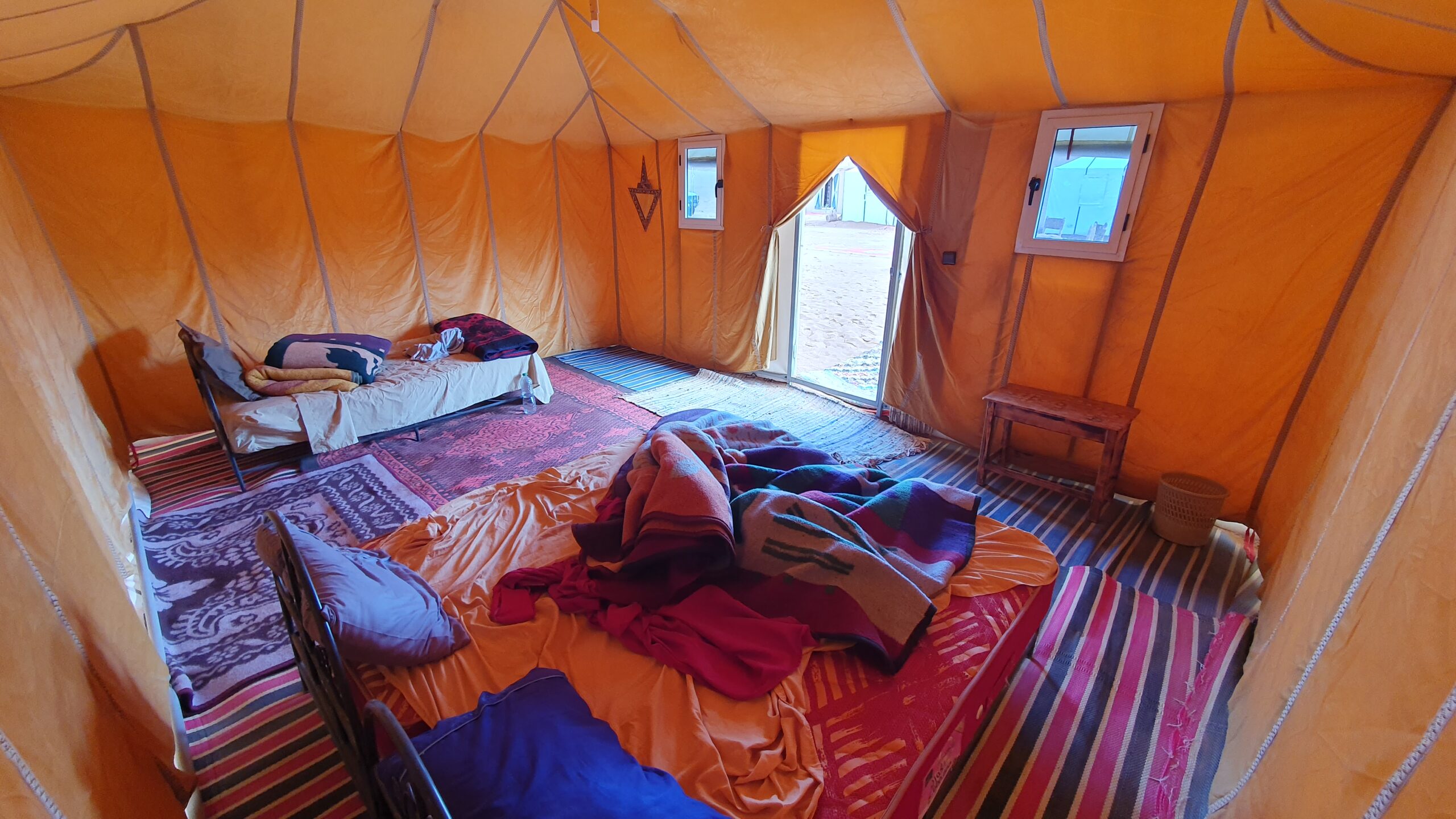
We continued on our path to M’Hamid (El Ghizlane), where the road ends. From this village, tracks lead through the Draa Valley, forming an undocumented network of pistes as they split and recombine periodically. The Draa River is dry most of the year. It flows close to the Algerian border into Lake Iriqui, which may have water during the winter. We realized that some tracks would lead us through the center of the lake, and travelers we met confirmed that it was completely dry. Before reaching the lake, however, we came to another sand sea: the Erg Chegaga, our next point of interest. Nearby, we spoke with a courier who was transporting water from a spring to camps in the erg area. Although we hadn’t planned to, we spontaneously decided to spend the night in a tent camp he recommended, close to the area’s highest dune. To get there, we had to cross some dunes, which meant riding on sand the whole time. We spent our last cash on the accommodation, including snacks and a nice dinner that we enjoyed with the hosts and no other guests. At first. During dinner, the wind picked up, and a few raindrops fell. Our host received a call, and after a while, four other guests arrived by car. We learned that the tent in which these people had planned to stay had blown away, so they decided to change campsites. However, our campsite was safe, as it had existed for several years. After a rainy night, we had a nice breakfast together before leaving the campsite.






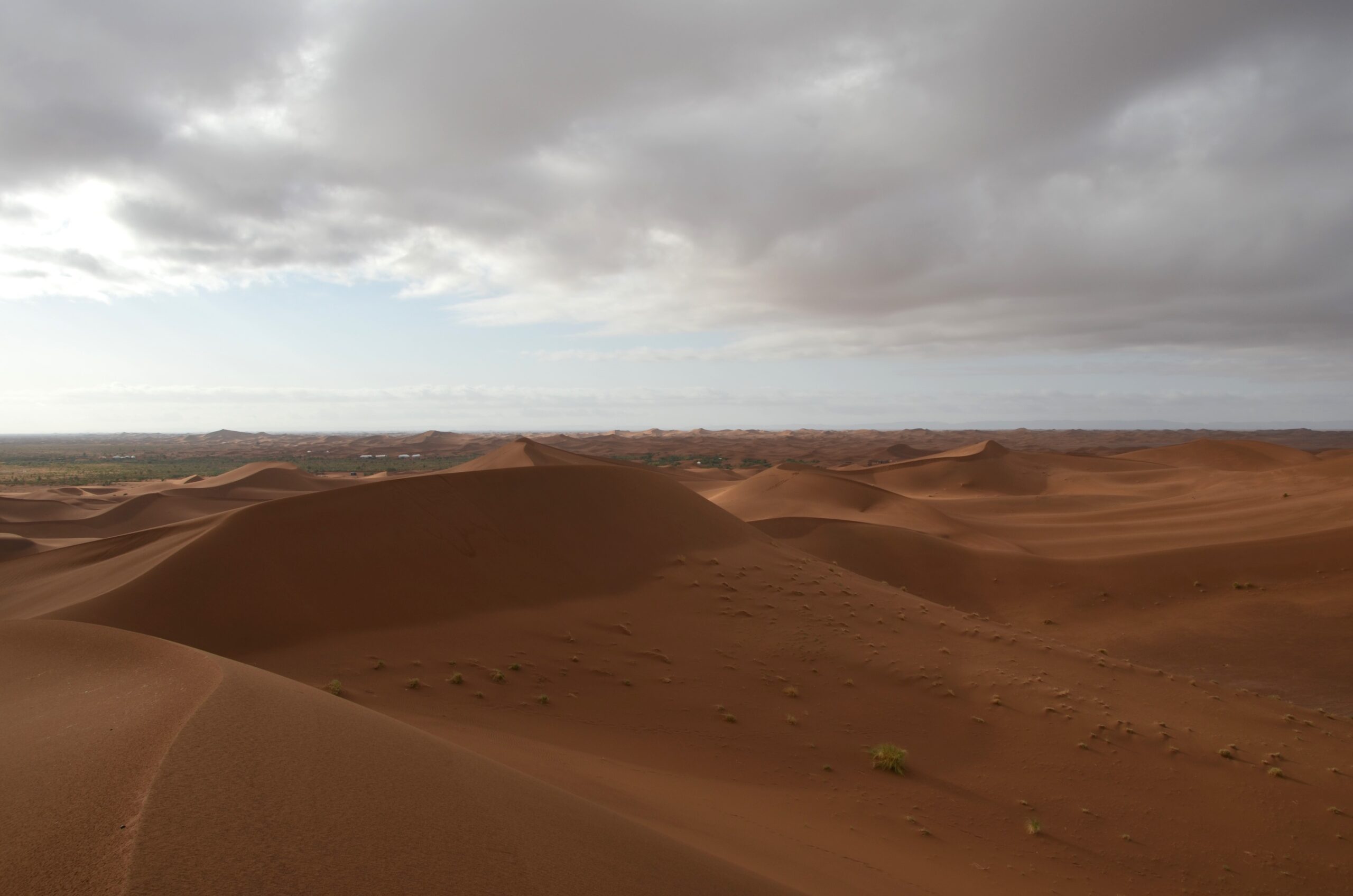

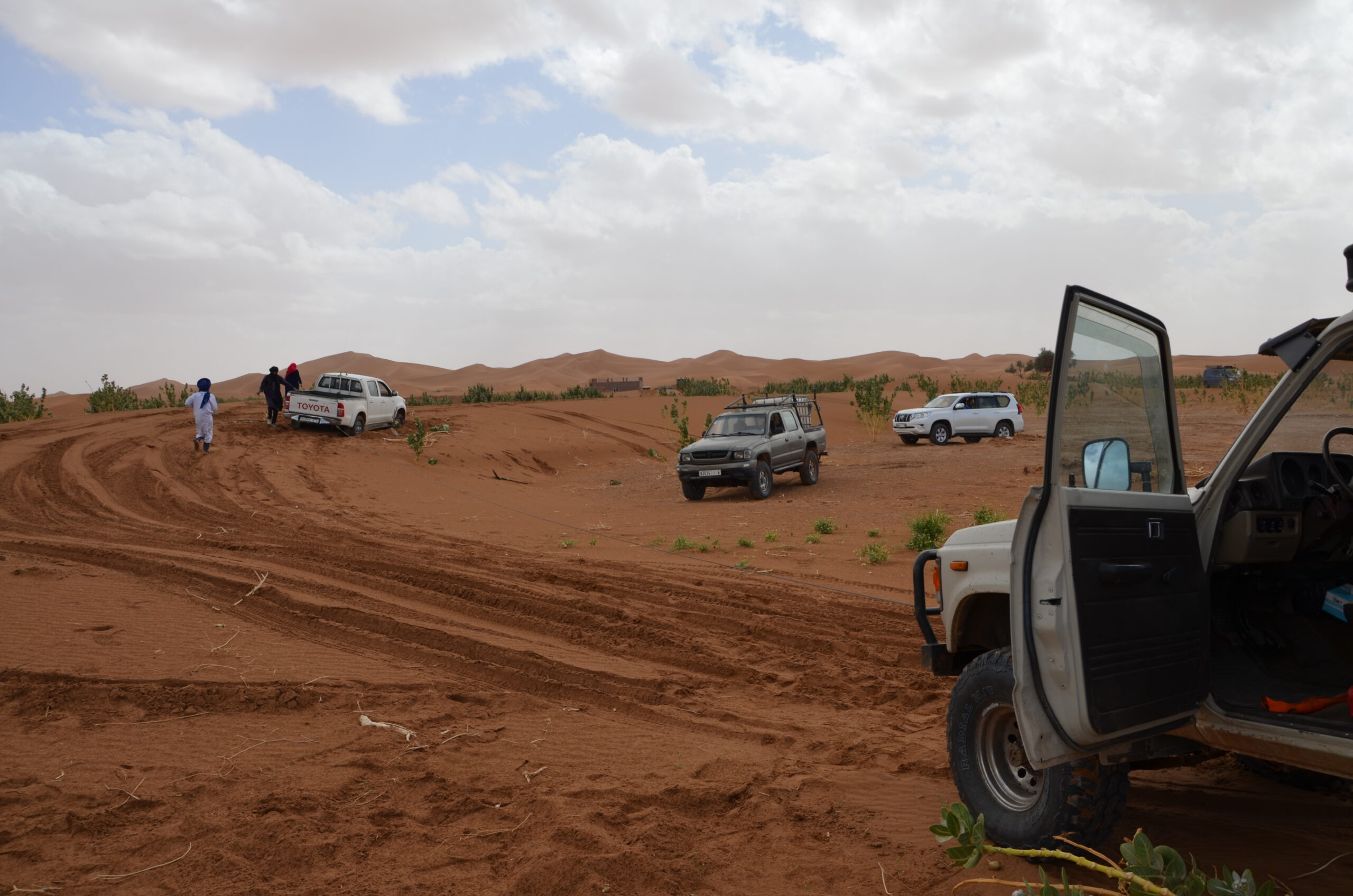


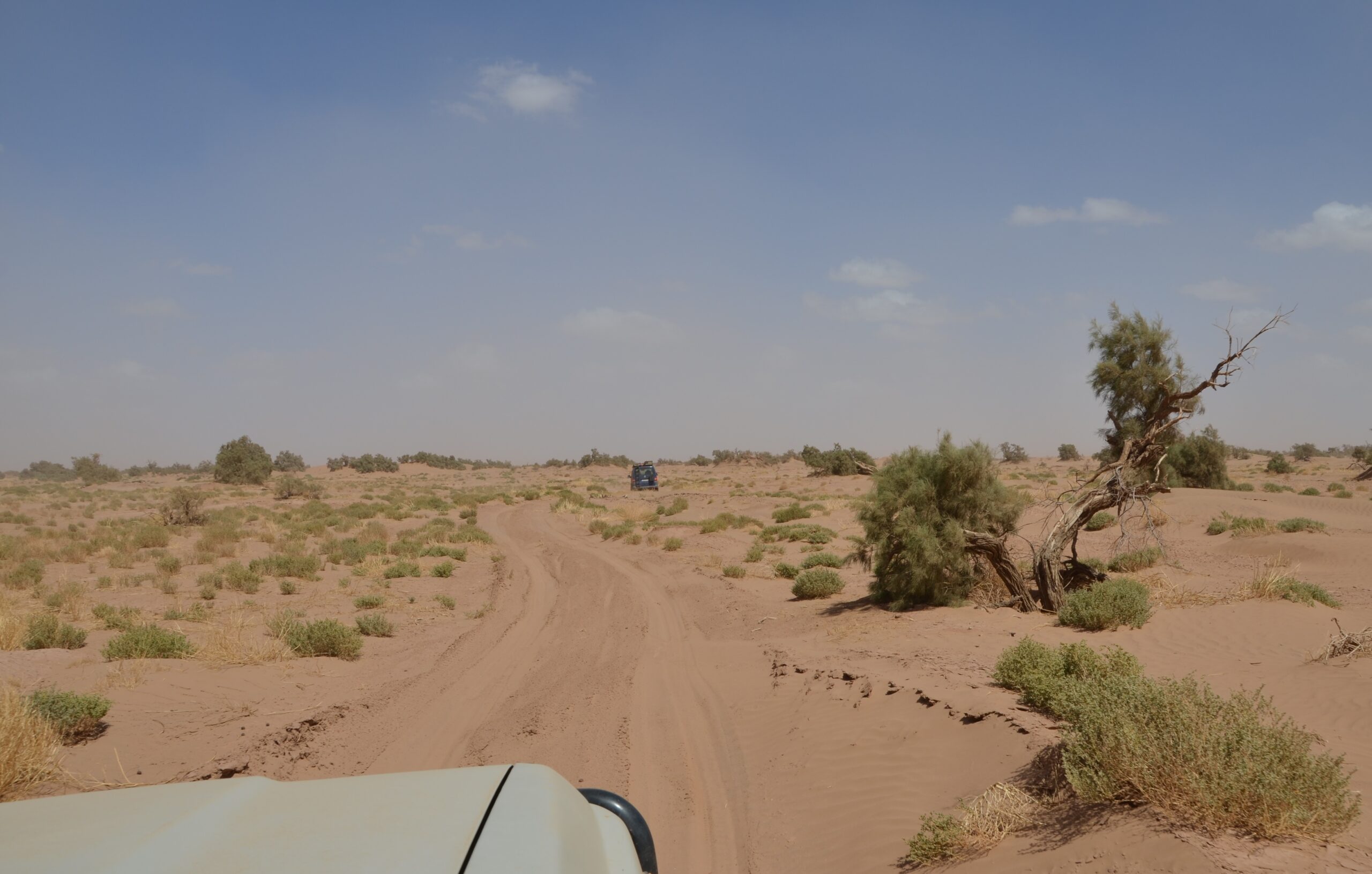


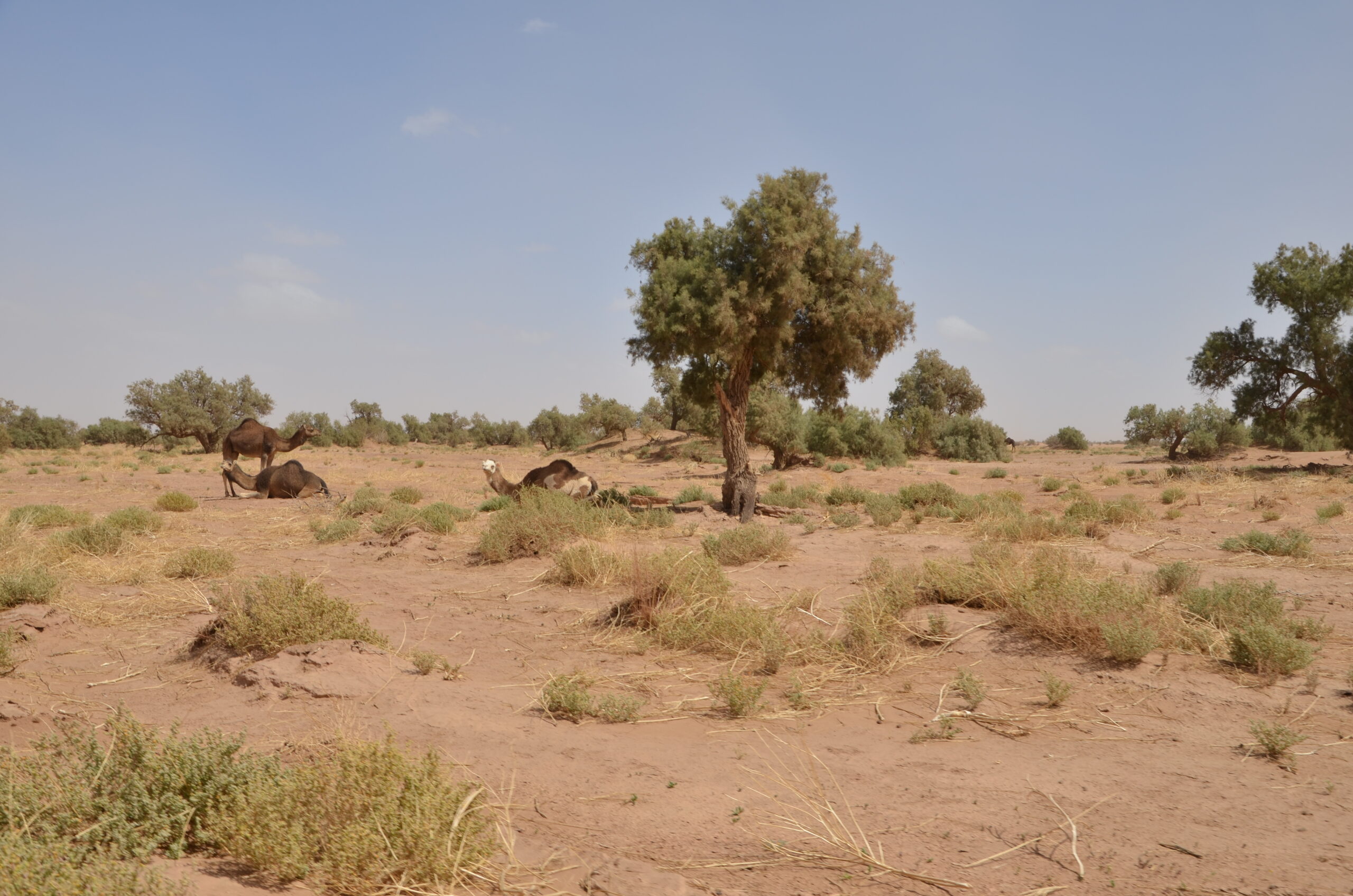
We didn’t drive far before realizing that riding on the sand was more difficult now. The top few centimeters were wet enough to walk on. However, when driving on it, the car sinks through this layer into the dry sand below. The engine needs much more power to get through this, which is why we crossed some dunes after trying more than once. We weren’t getting far this way when a local stopped us and warned us that Lake Ireki and its valley could not be crossed. There are apparently two large rivers flowing into the lake that are no longer dry. No local wanted to try crossing them. Unfortunately, this is the direction we must go.
We rested and discussed how to continue. Unfortunately, there was another issue due to a miscalculated test. We might not have enough fuel to drive all the way back if we reach the rivers blocking our path. We had planned to not fill up our tank completely to save weight, which might improve our ability to ride on dunes. However, we did not anticipate the rough terrain on the way to our last campsite, and the extra 20 liters of fuel we had may not have been enough to reach a gas station if we needed to turn around in such conditions. Stupid calculation. So, we chose to drive back to M’Hamid to avoid getting stuck in this area. Right after we made this decision, the water courier passed by and offered to take us out of the sand. We followed him, even though we both had trouble climbing some dunes. We took it with humor, though, and helped other locals who got stuck in the wet sand. While doing so, we met two other Germans who had also decided to go back to M’Hamid. It was too late to do so during daylight, which is why we spent another night just two dunes away from our last campground.
Comparing pictures taken the morning after rainfall:

and the morning after a dry day:

one can see that the area covered by water decreased significantly. Nevertheless, we chose not to take any risks and went back to M’Hamid with our new German friends to a campground. It was the right decision, as we spent two more lovely days together and realized that we had more in common than we expected.