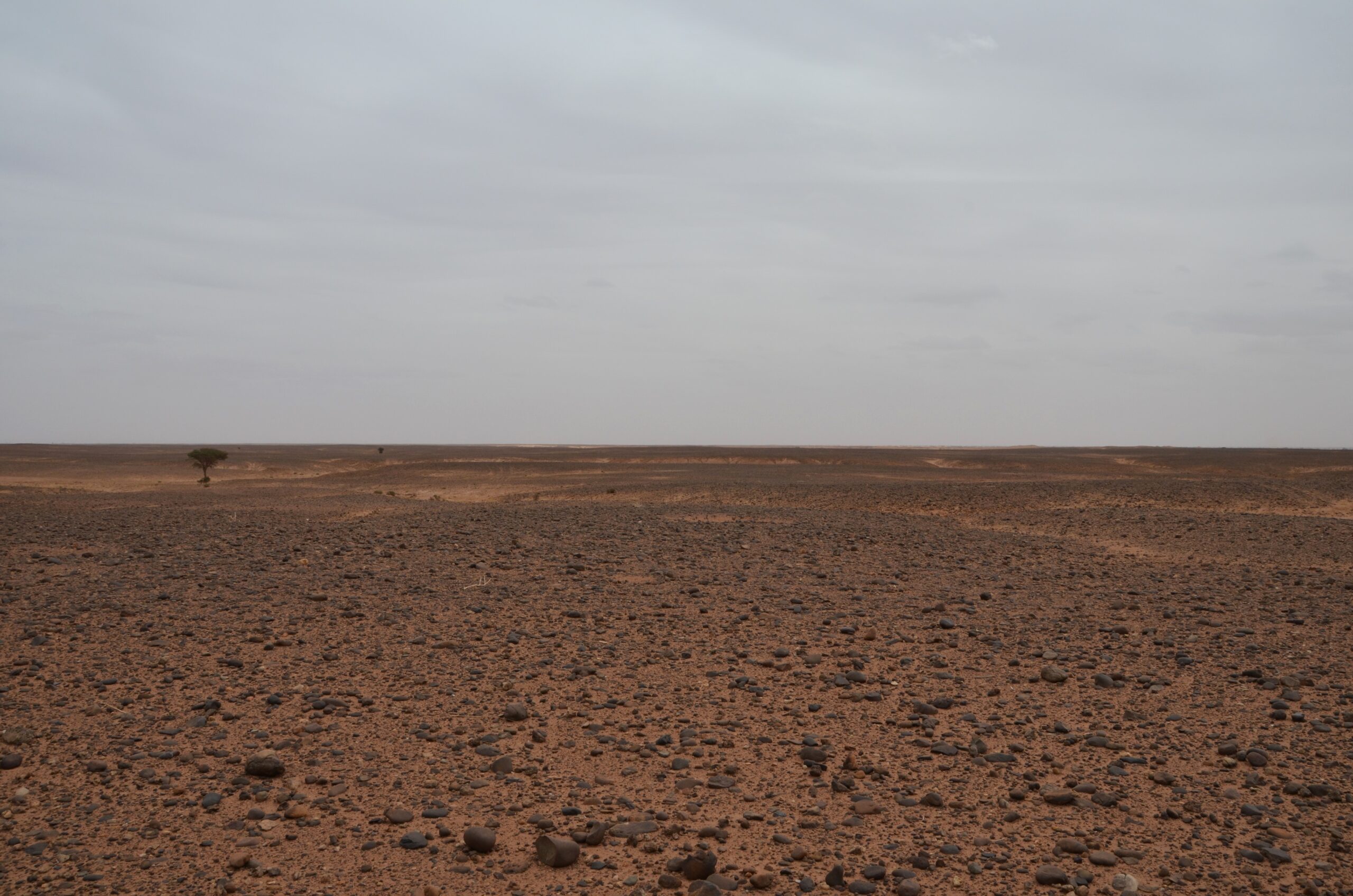
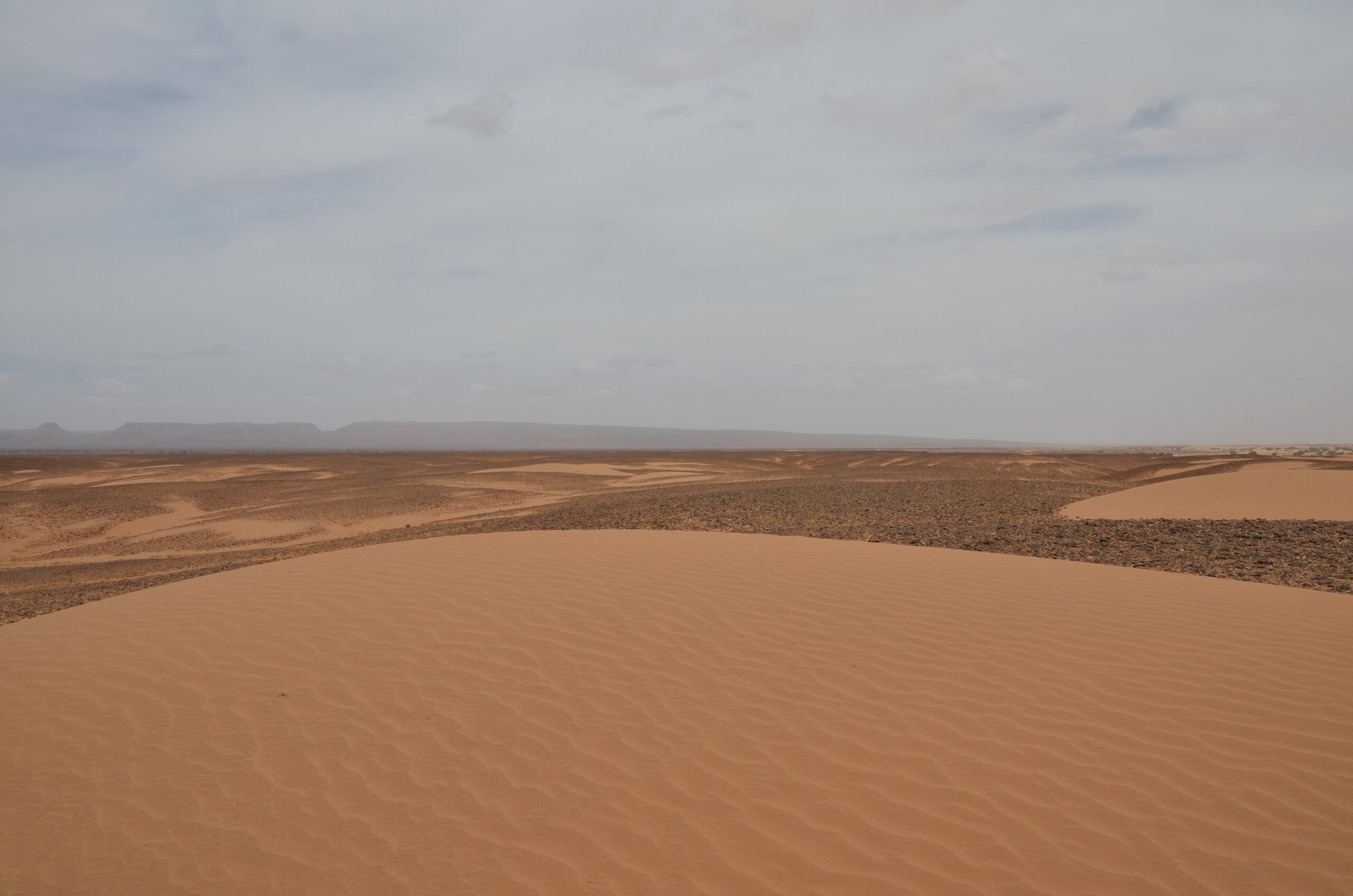
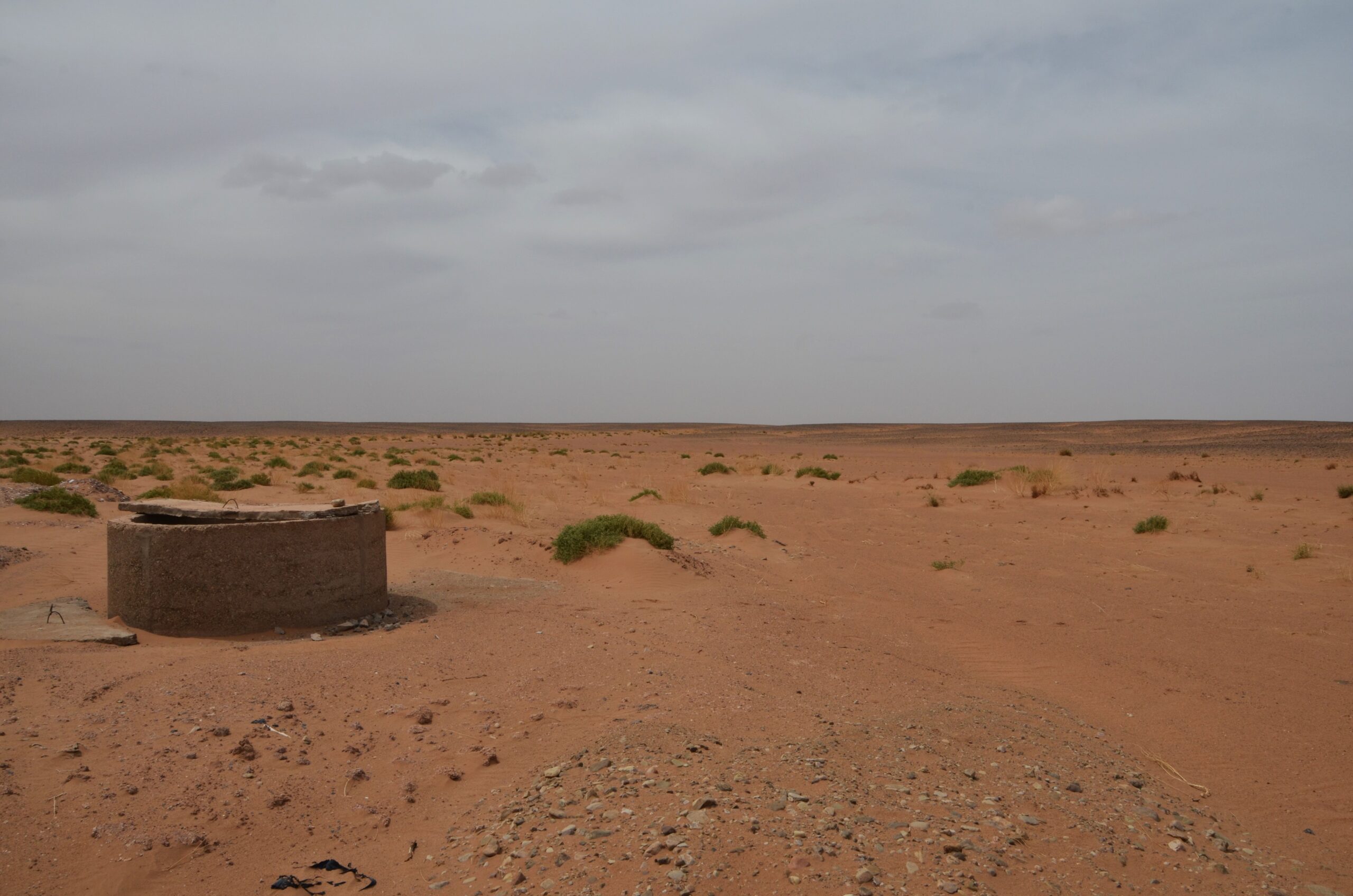
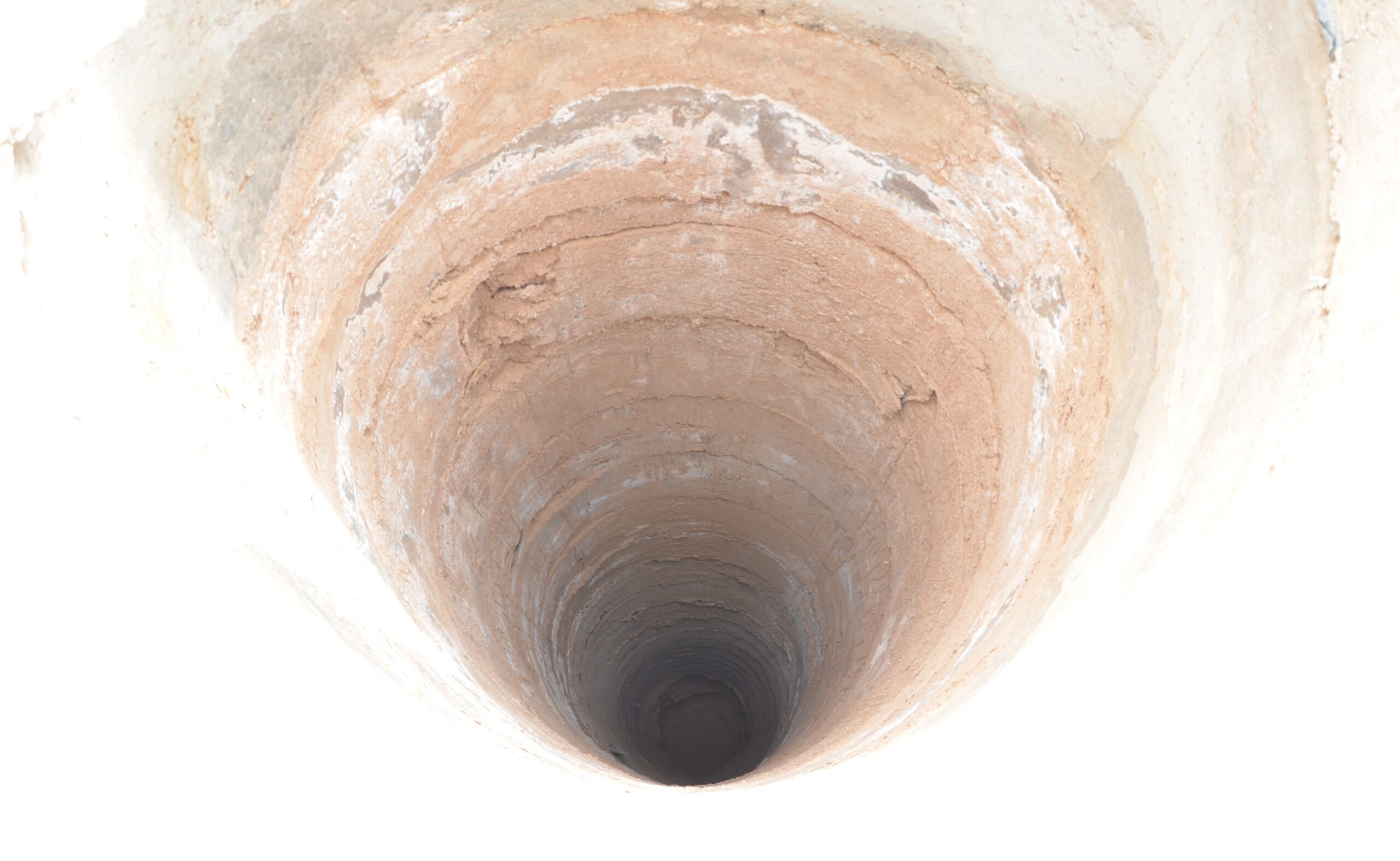
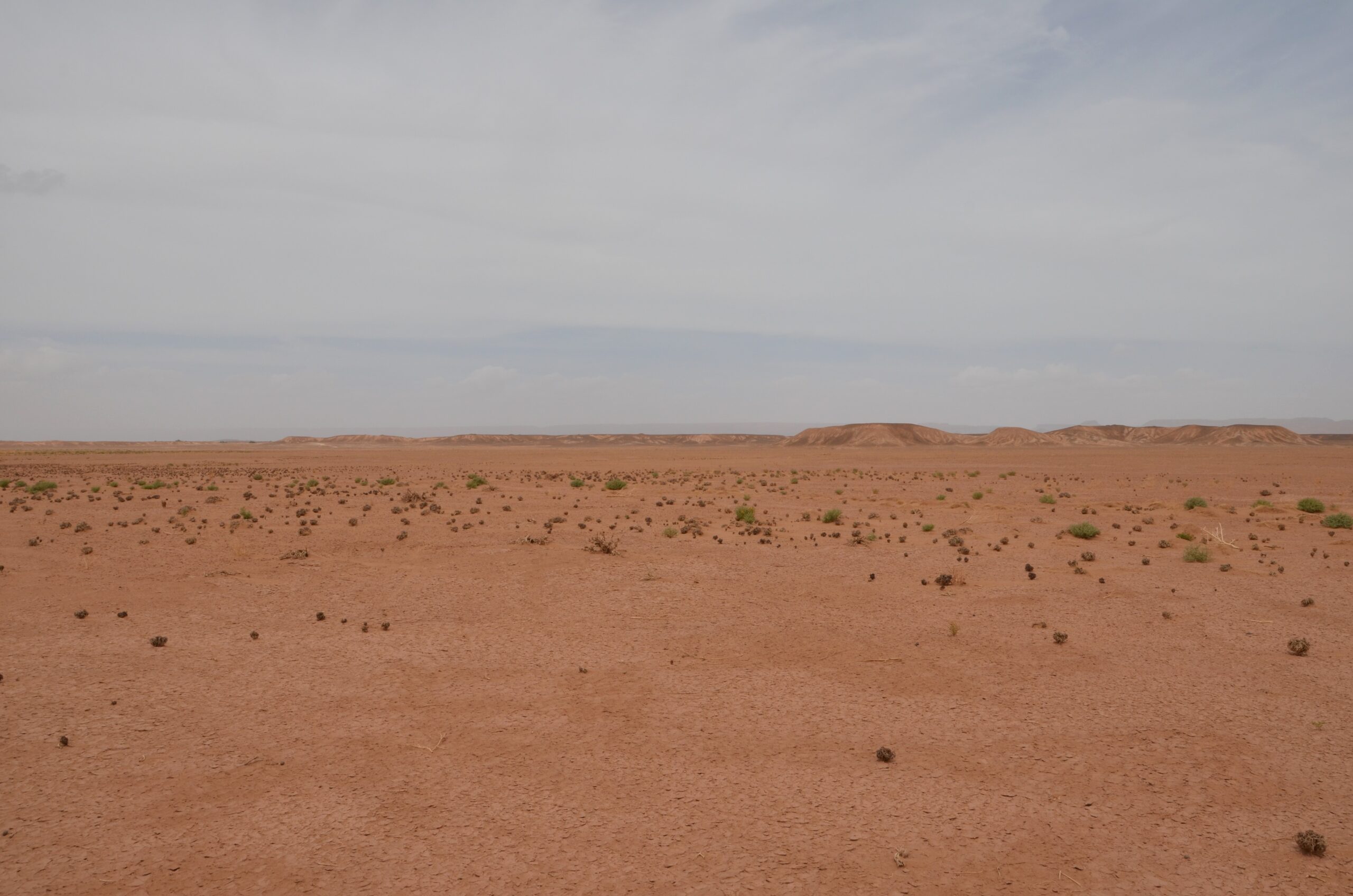
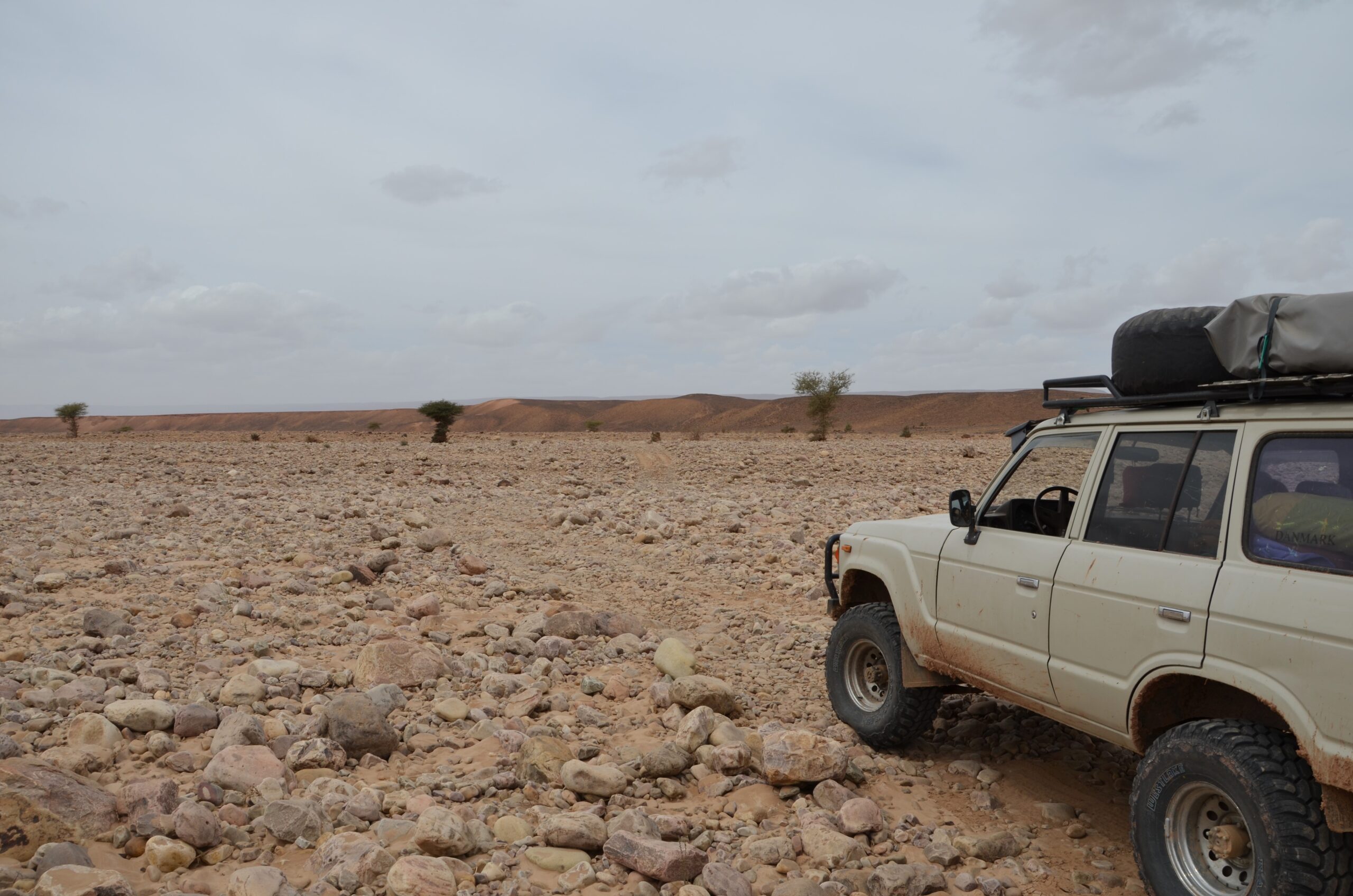
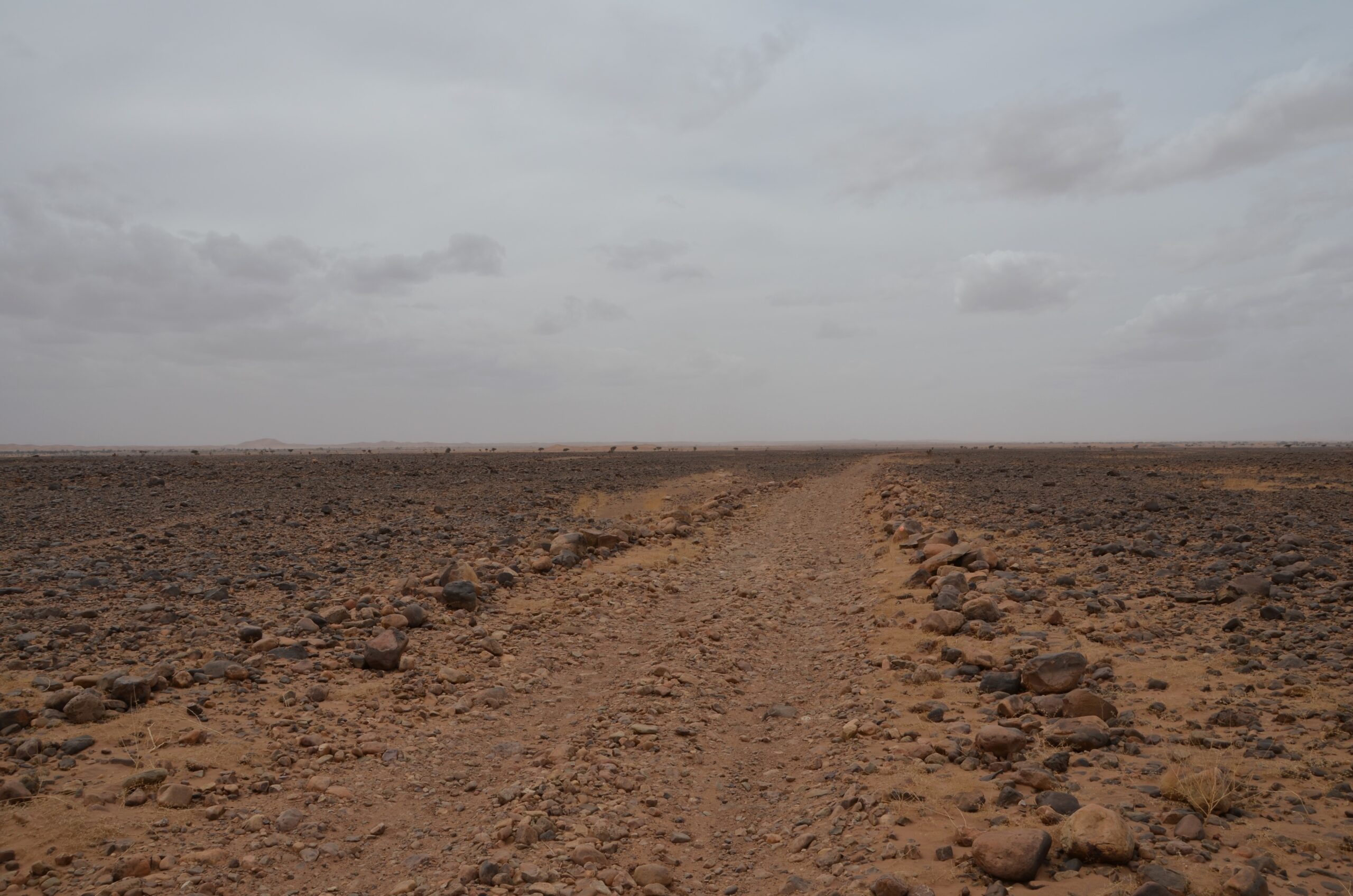
Our new German friends were heading in the same direction, but they planned to drive through the surrounding mountain range. We were curious to see the flooded lake, which is why we decided to try crossing the valley again. This time, we were better prepared with a full tank of gas and extra food and water. We now knew the most beautiful route through the Draa Valley: it is in the south and goes through a sandy area with few stones. However, this route is a detour because it requires driving along the dunes of the erg for dozens of kilometers. Crossing the valley requires driving at least 150 kilometers on unpaved roads, which would be difficult to do in one day. For this reason, we chose a more direct path that took us through another impressive area: a kilometer-wide field of rounded stones spread evenly across the ground. Nature creates some crazy things. Next to the tracks, we found a dry well dug several meters into the sandy floor. Working in such a hole is dangerous because you could be buried alive if the walls collapse. People make some crazy things.
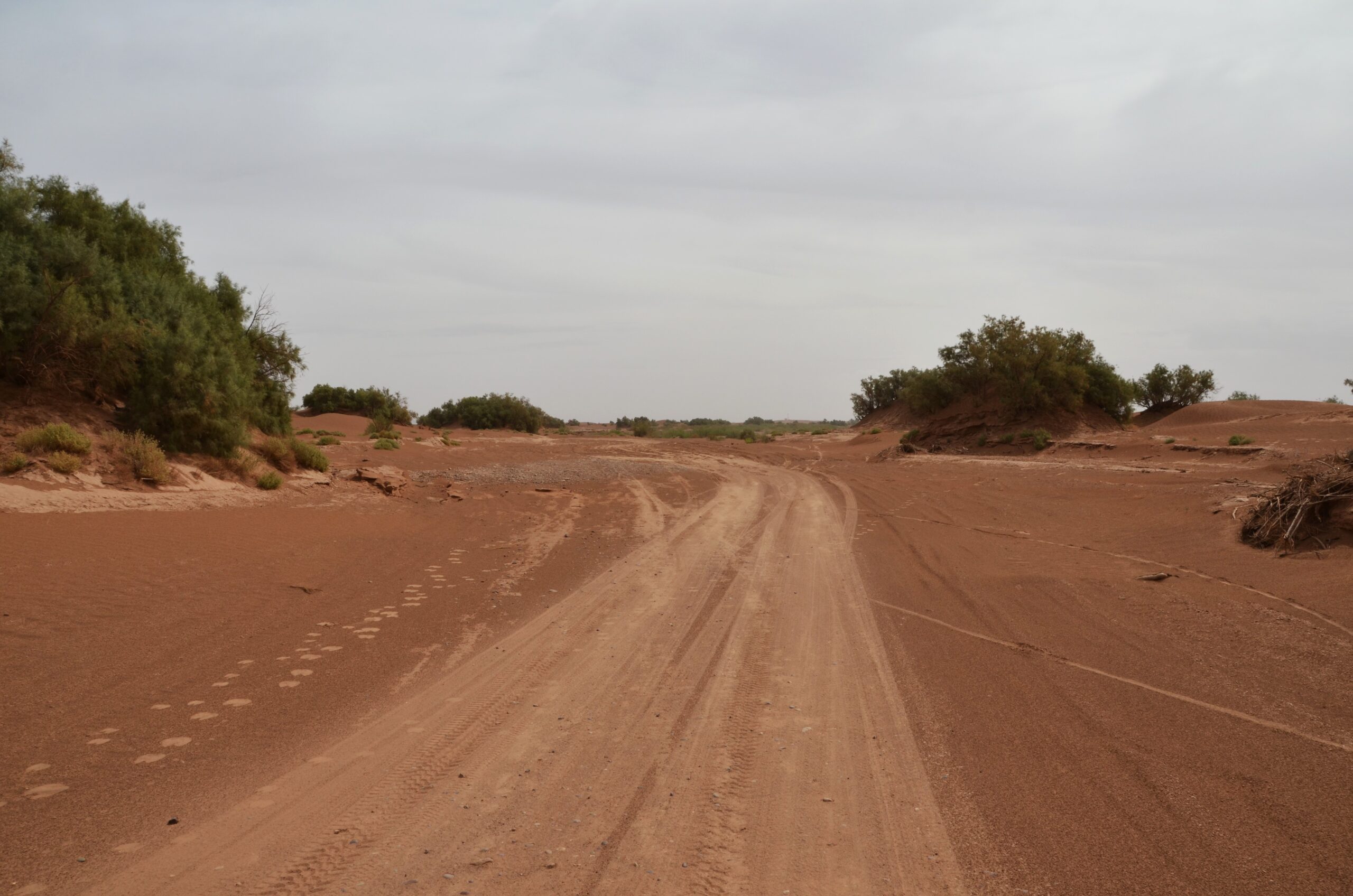
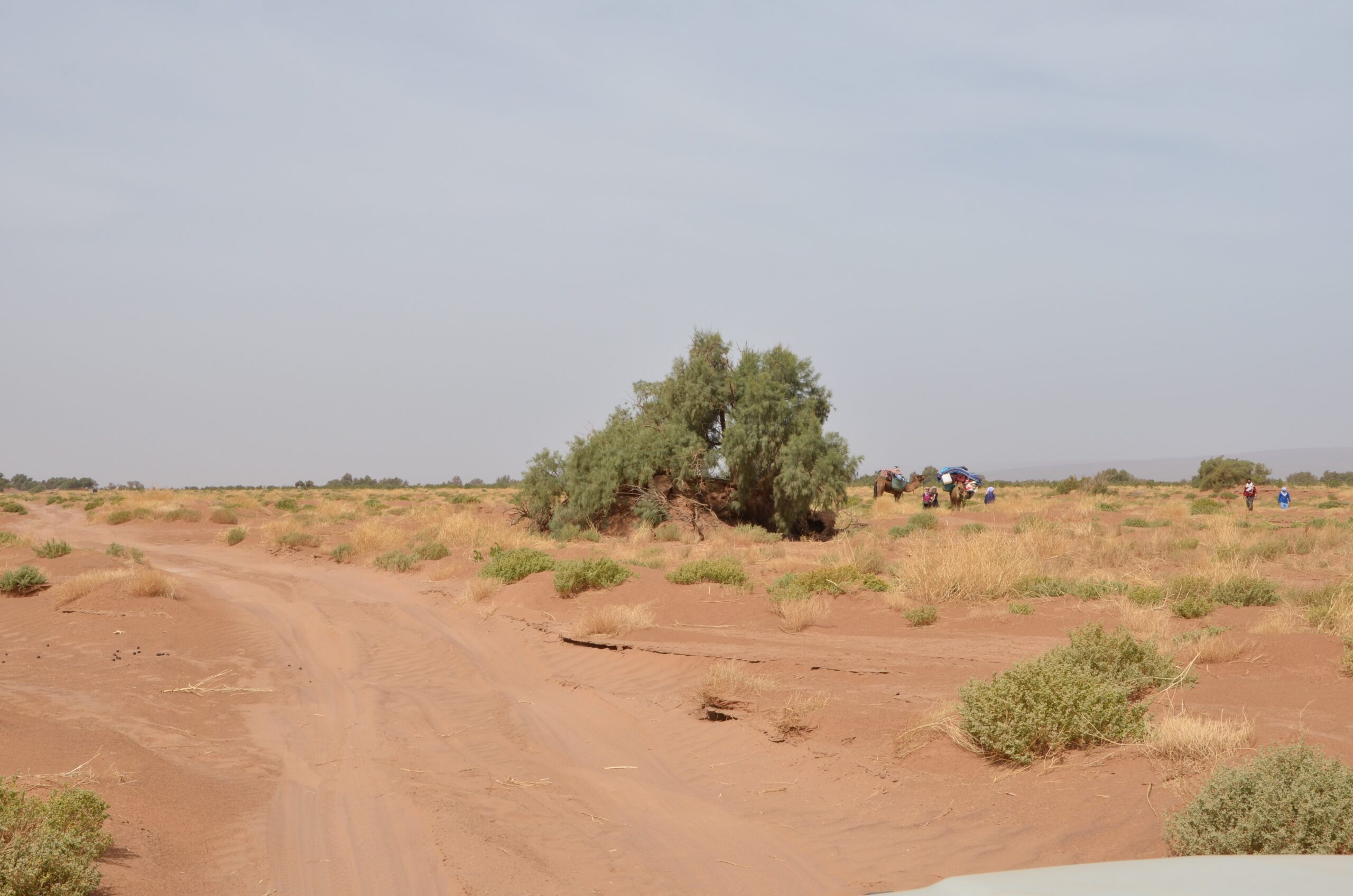

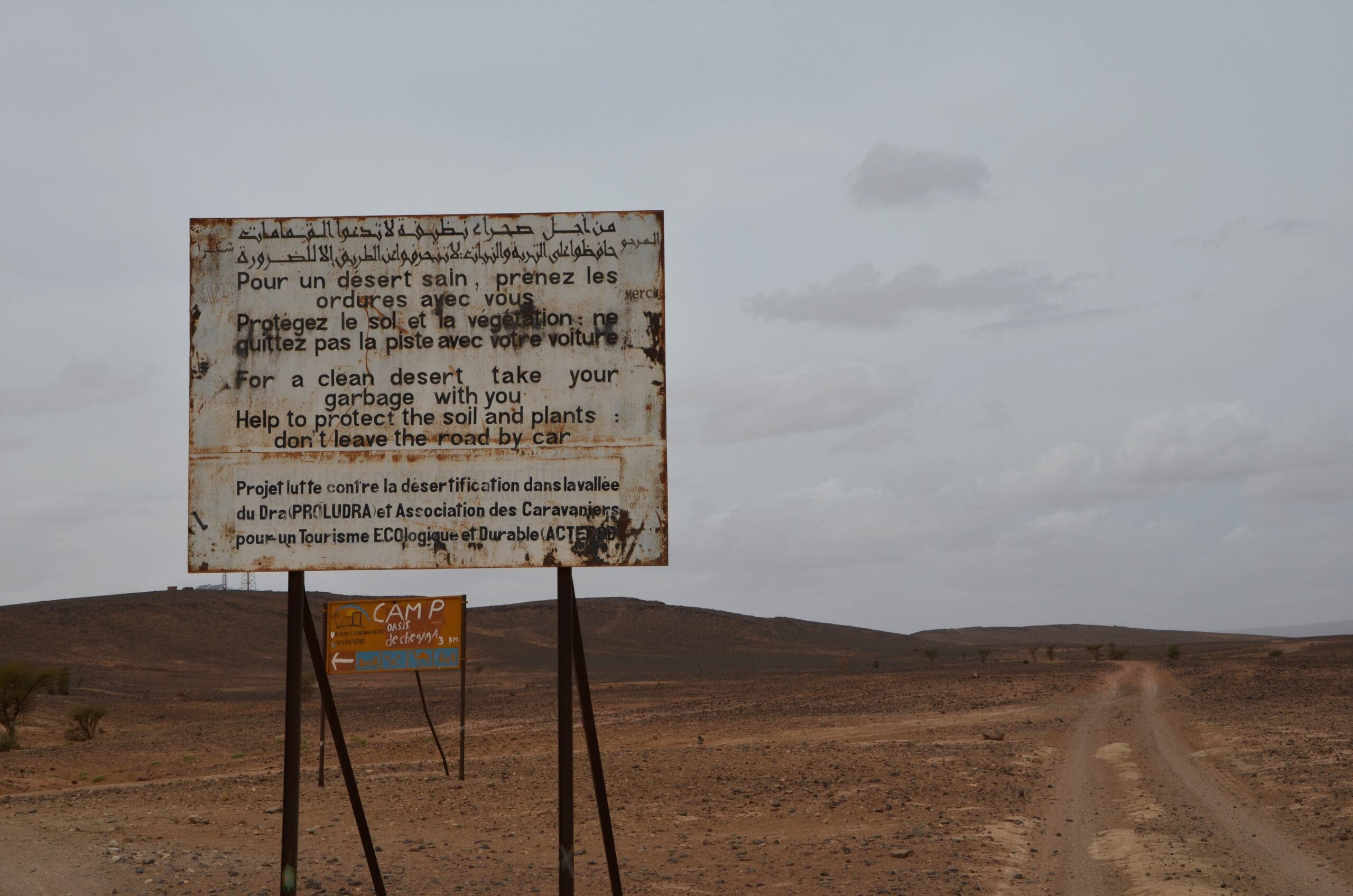
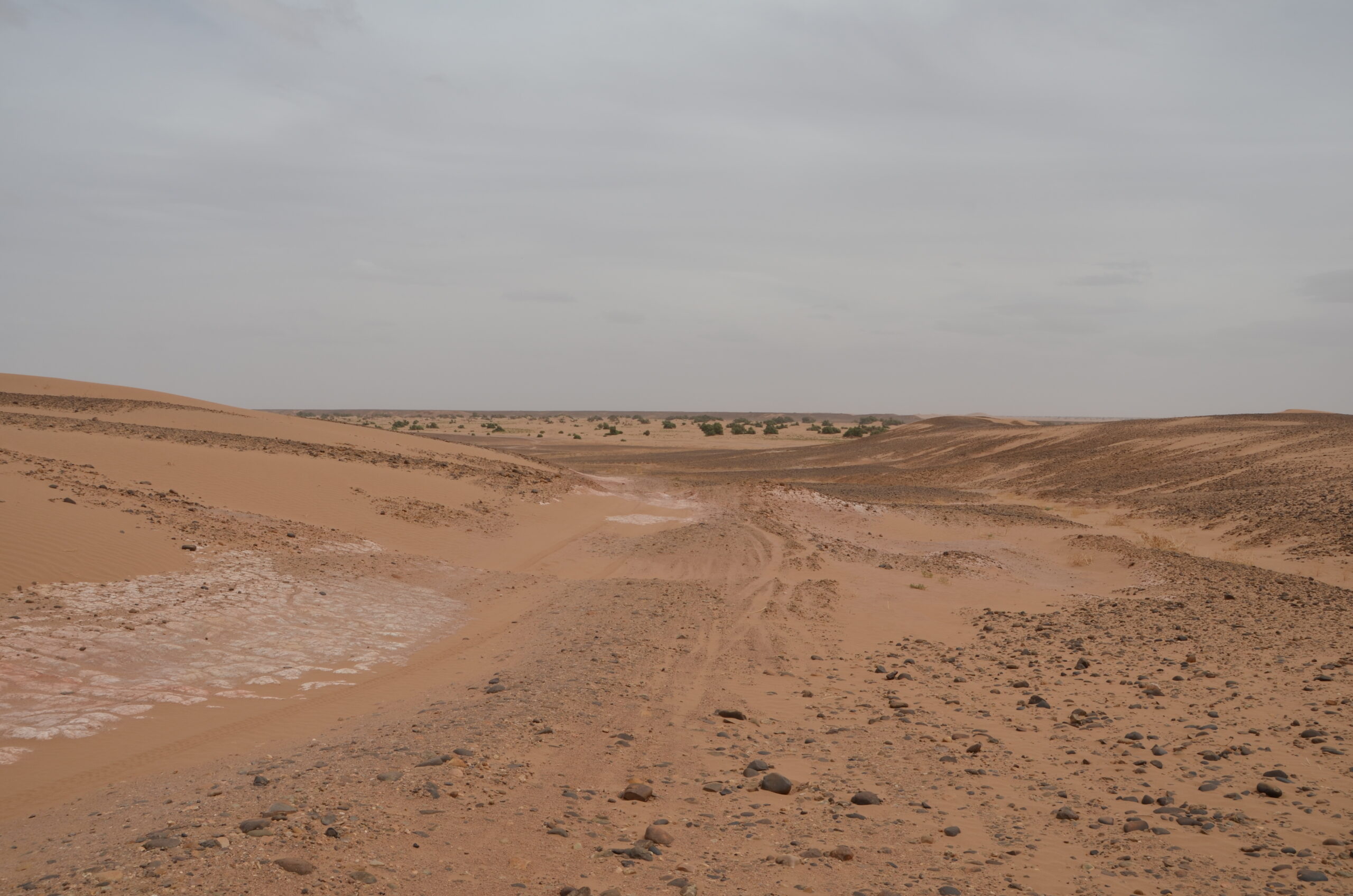
We went on and found dry riverbeds that other travelers had just crossed. If this was the spot that the locals didn’t want to cross, we absolutely understand. Driving through it requires maneuvering around round-washed rocks the size of soccer balls and larger. If water is flowing here, it can be hard to see where to pass them, and this can lead to serious problems. No thanks. It was good that we waited for the rivers to dry out again.
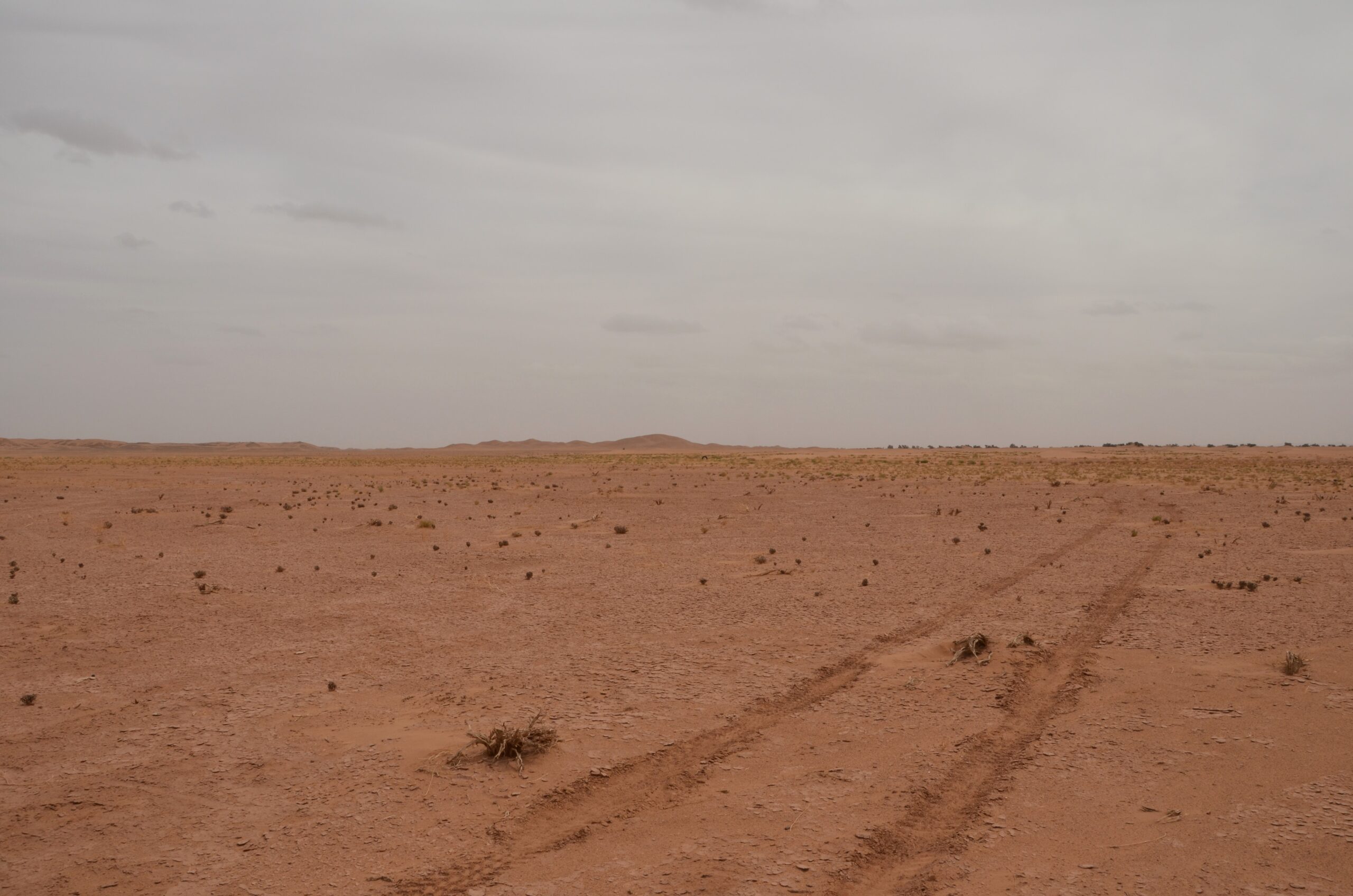
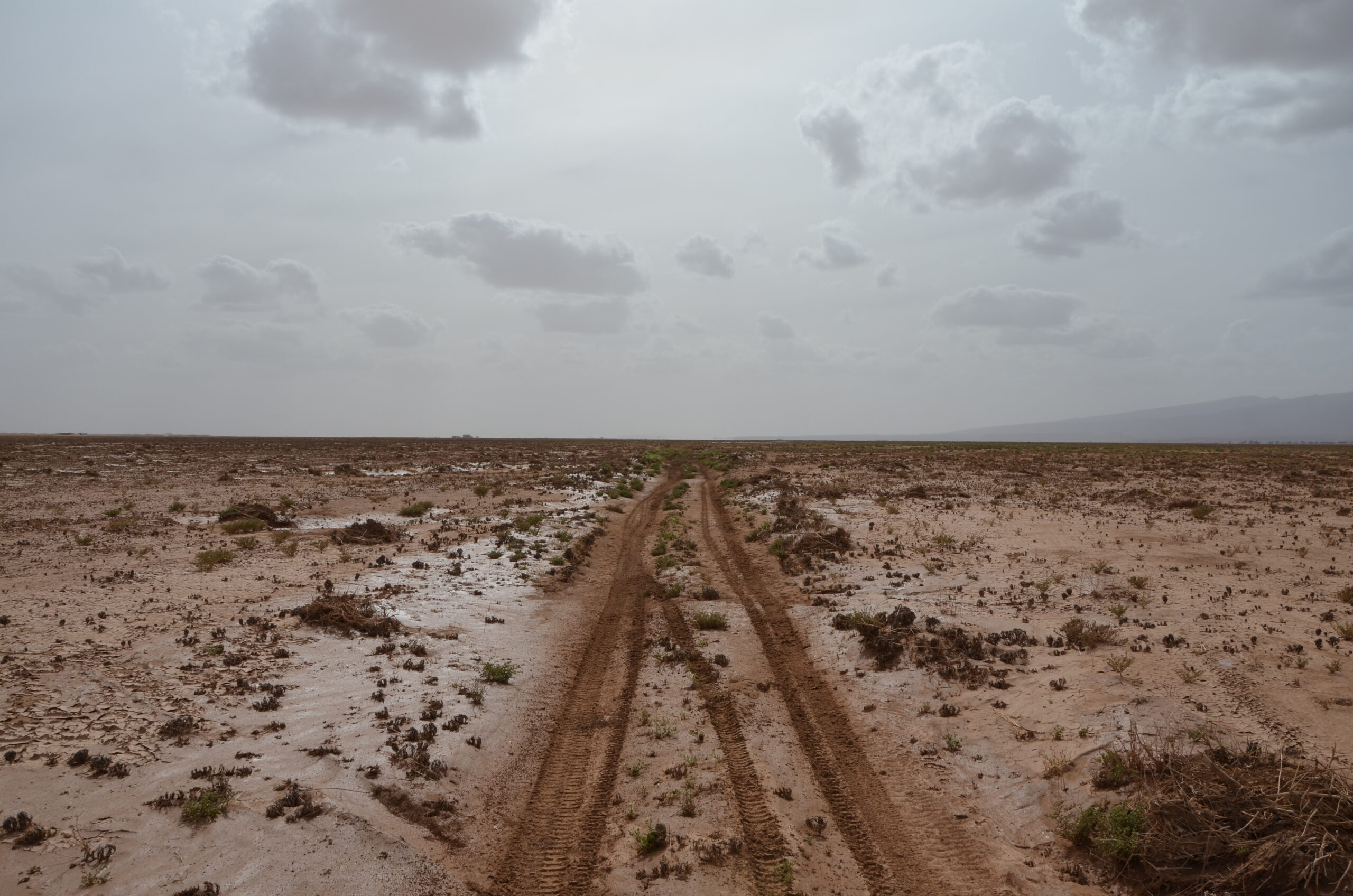
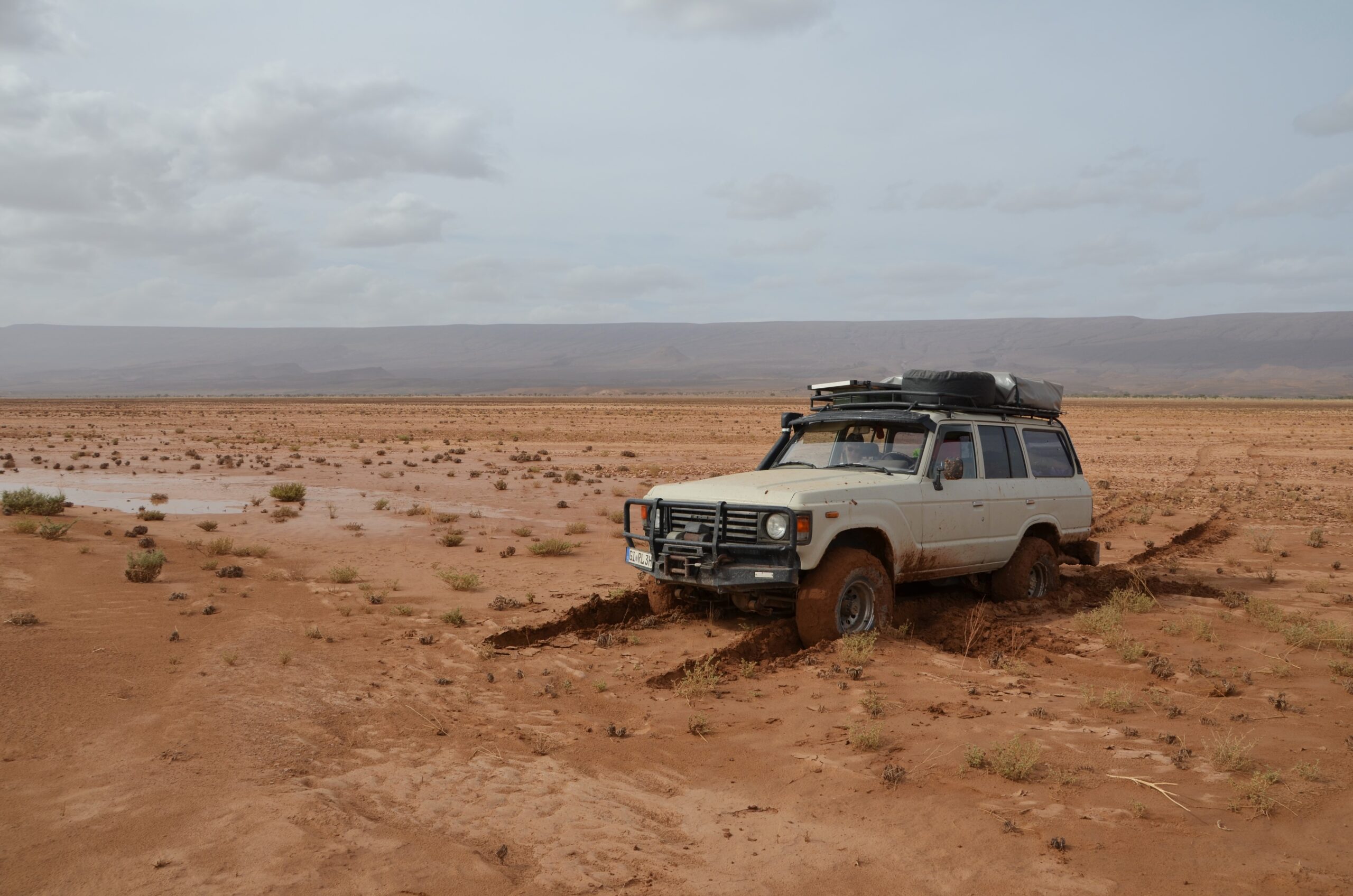
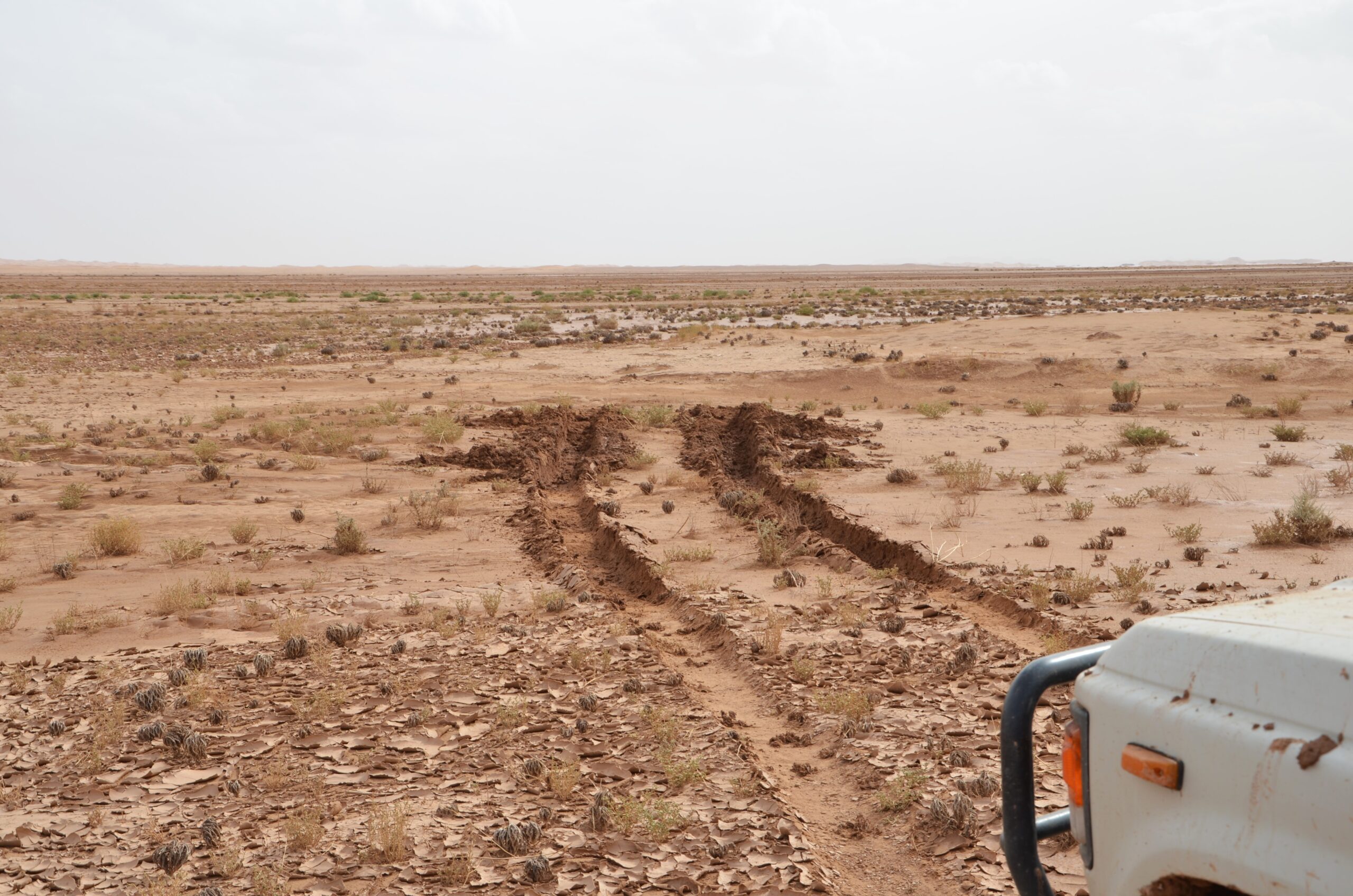
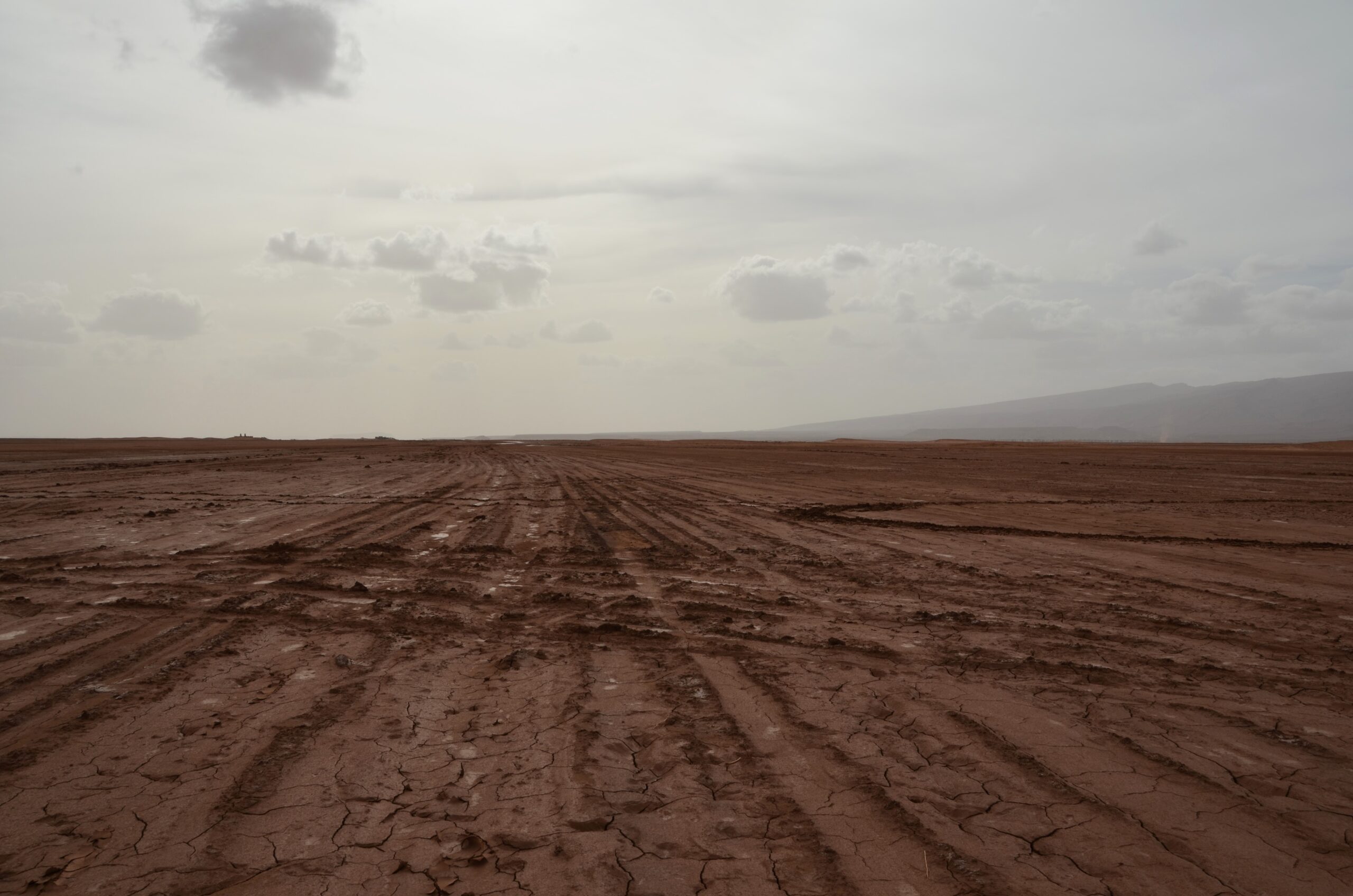
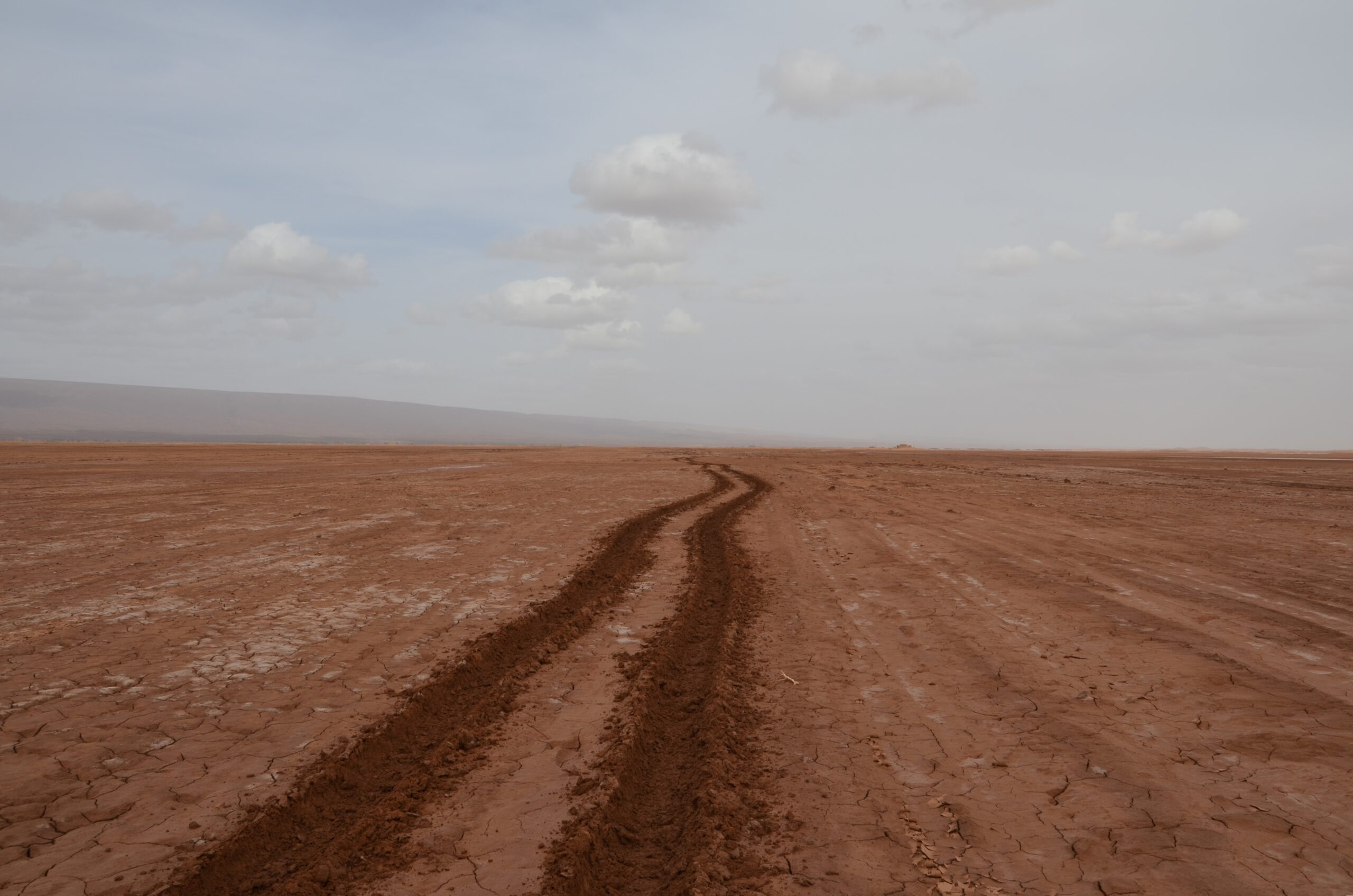
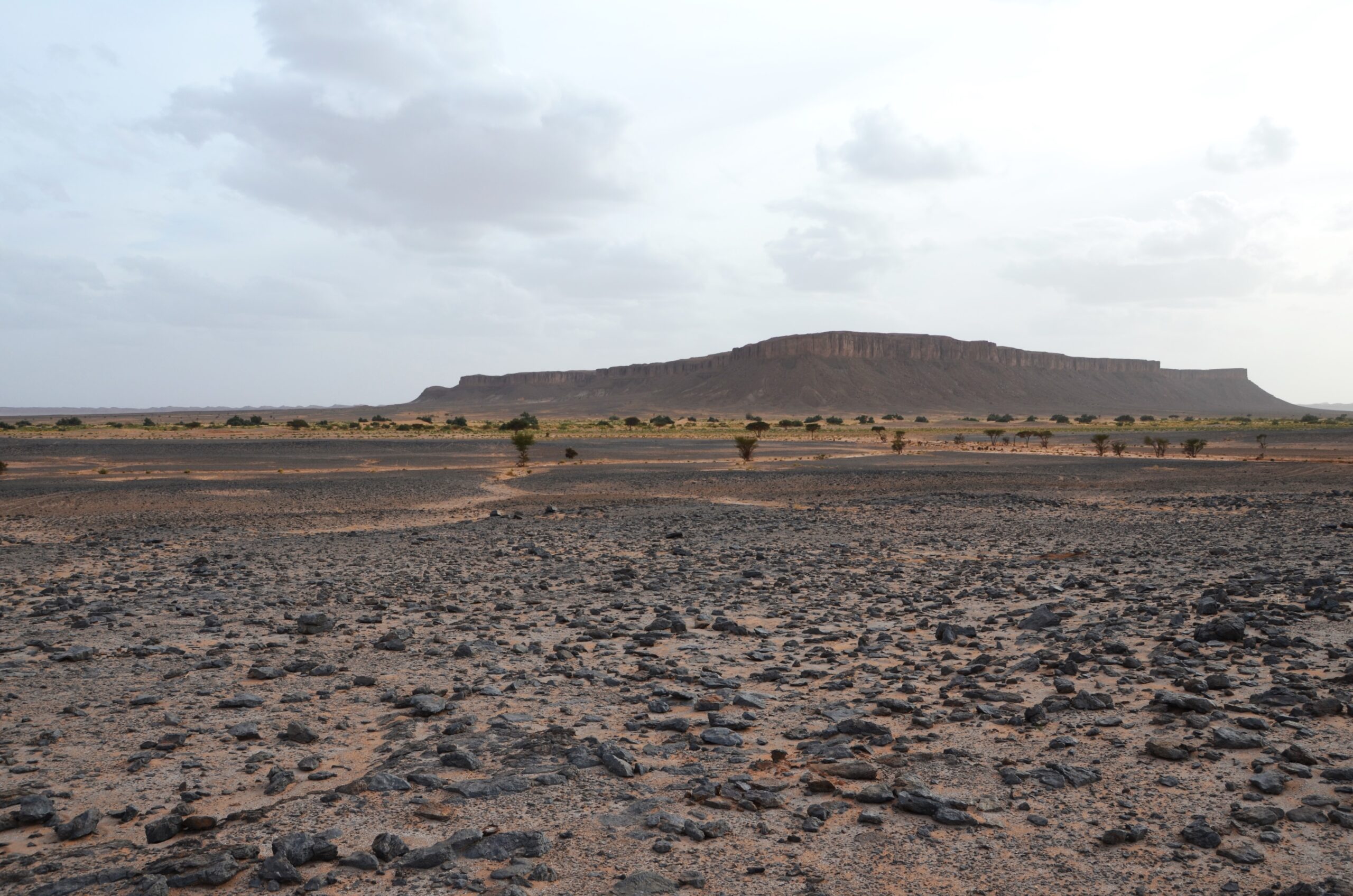
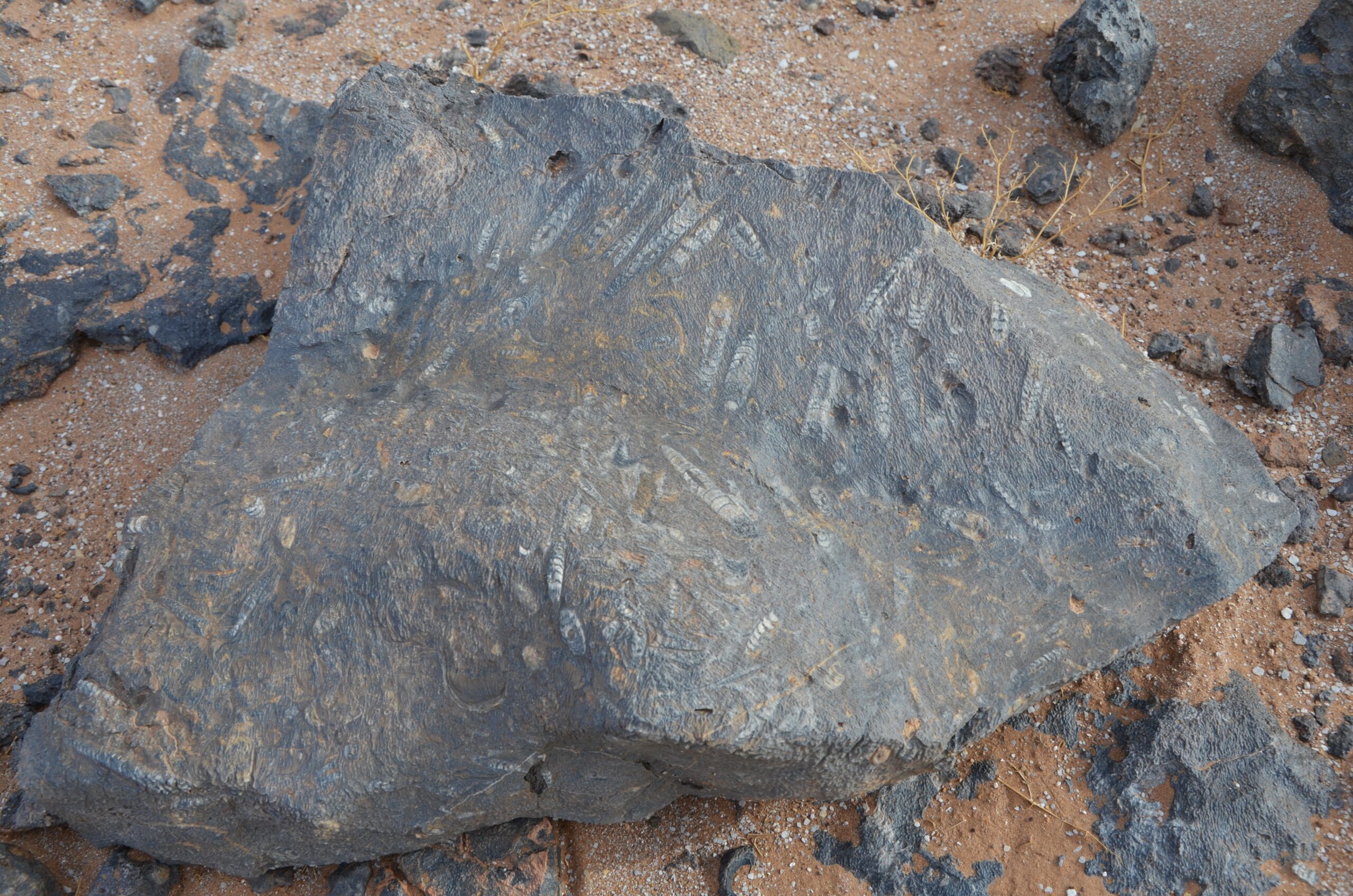
We intended to avoid the northernmost route on the other side of the less harmful riverbed. However, we missed the junction, if there was one. Since the desired route was not too far away on our map, we followed an off-road track towards it. It led us directly into the seemingly dry lake. But it was just an appearance. We realized the floor was very muddy. It wasn’t the best idea to choose this direction, but we stuck to it. A few minutes later, we got stuck in the mud. We saw other cars passing by less than 100 meters away. After briefly grabbing our shovel, we were able to get out. We approached the path with optimism, but it was nonexistent. There was only more of the same mud that we had ridden through before. Thankfully, there were several fresh tracks to follow. And we got stuck again. This time, we didn’t need the shovel because we could drive out of it with full engine power. We continued through the mud of the lake without stopping. Then, we realized there was no lake. Just mud. Unsatisfying. We came here for no reason. In any case, stopping beside a small hill to take a picture of a mesa in the valley turned out to be a very lucky decision. The rocks on top were filled with fossils that we studied for a while. Gorgeous.
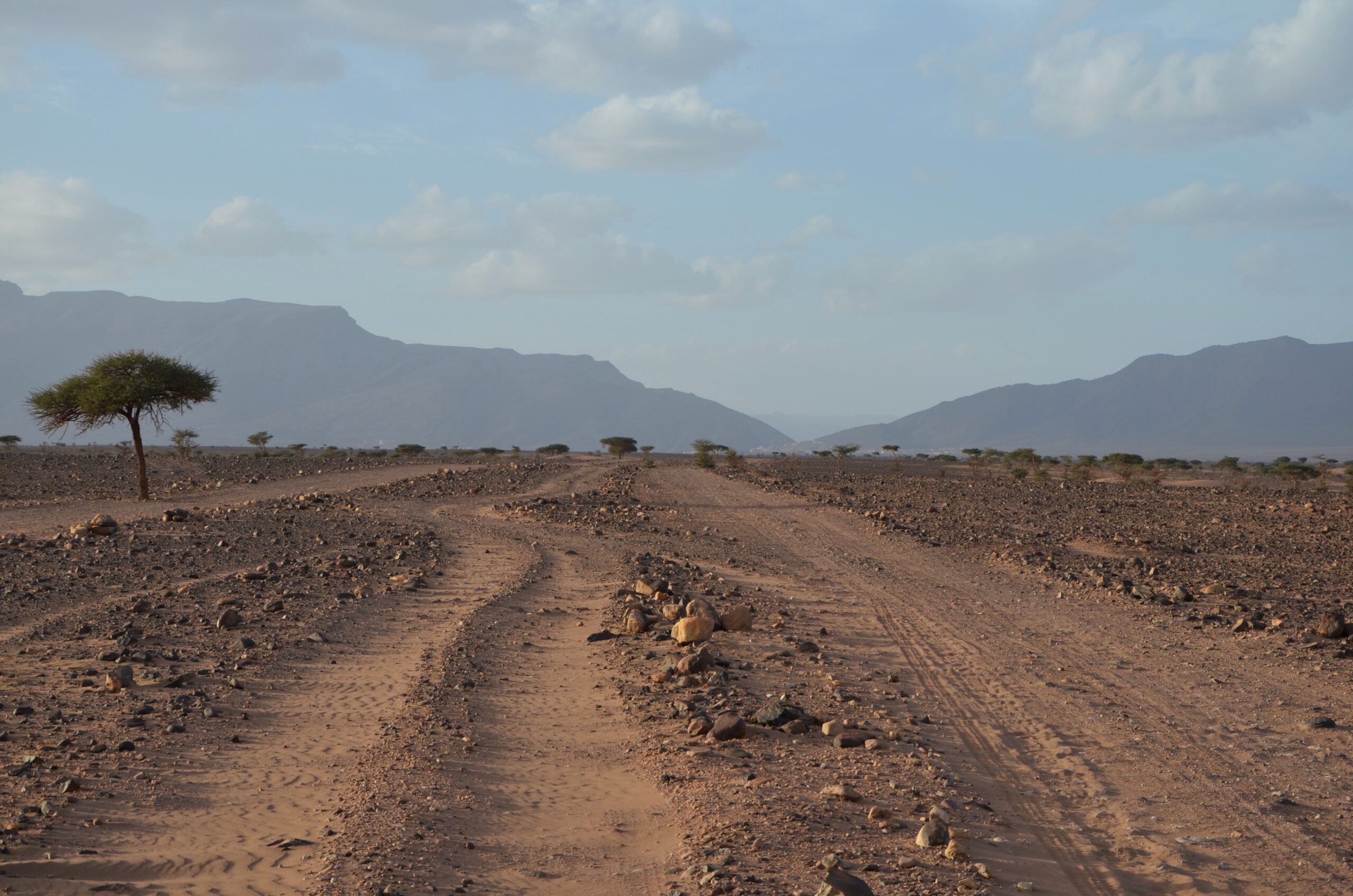
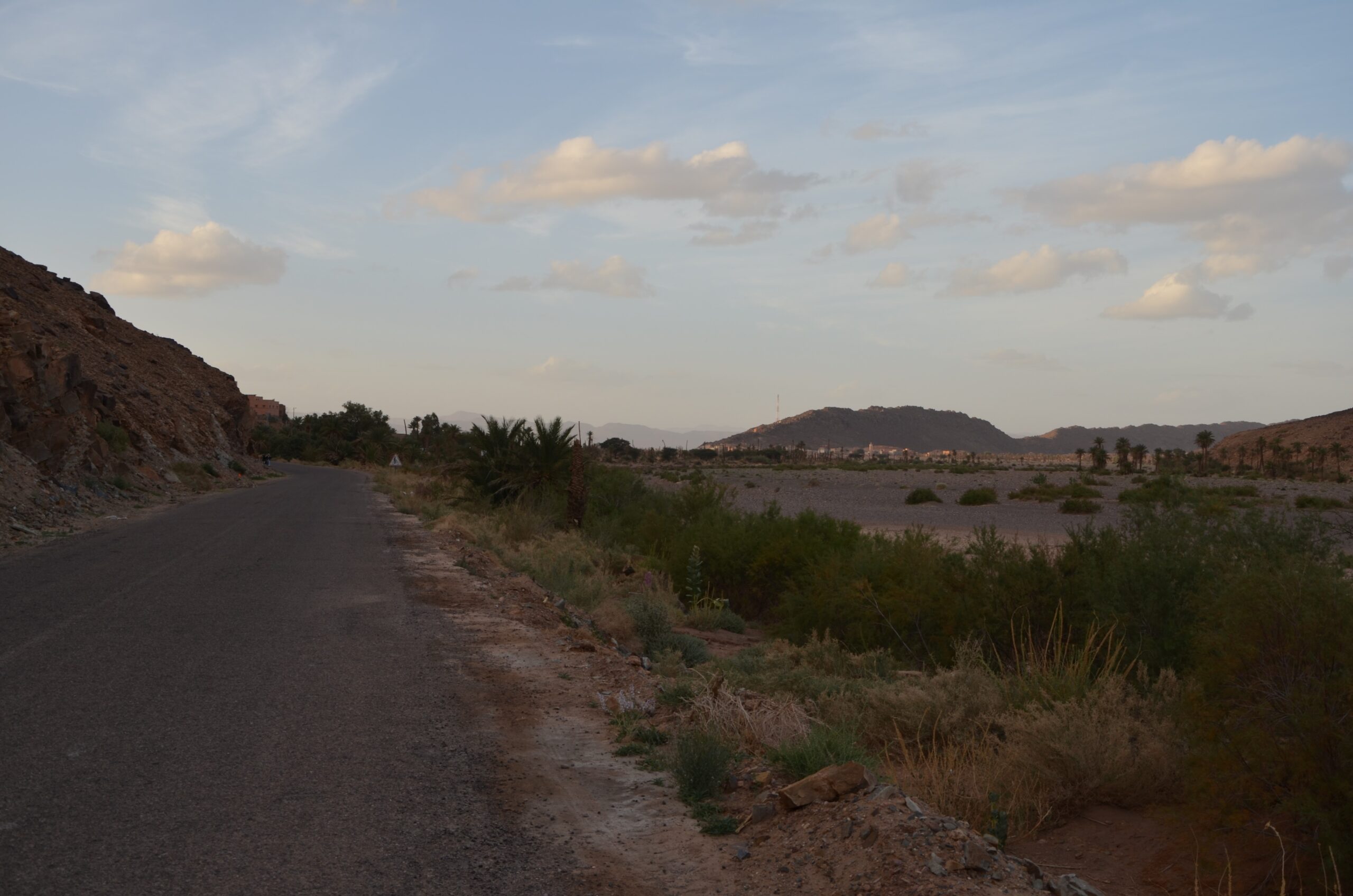
We continued on our way and tried to follow a local car, hoping it would take us out of the valley quickly. After a while, the driver stopped to talk to us. We learned that it was a hired taxi, but the driver had another appointment, and navigating this rough terrain would take hours. We agreed to take the passenger to the settlement where we were going, which is the second place to access the area: Foum Zguid, which is located in a valley formed by a gap in the mountains. Since we ran out of cash, the driver invited us to camp at the site he was organizing. When we arrived, we saw several luxurious guesthouses and an associated campsite. We found the best showers we had in all of Morocco there: The water was very hot with constant high pressure in clean, well-maintained showers. Don’t ask what others sell as a “warm shower,” but typically it meets the basic need.